


A history of
Our Farm
Helen tells us about her family farm, its history and why she chose to go organic.
Eastbrook and Lower Farm together cover some 1500 acres, in a long thin strip running from the top of the Marlborough Downs down to the heavy clay land of the Vale of the White Horse. We may be only half a mile wide, but it’s five miles from top to bottom. With the ancient trail of the Ridgeway dissecting the farm, and lots of footpaths too, it’s a great place to walk, ride and cycle across wonderful countryside, with heaps of wild flora and fauna, and all our fabulous livestock to admire too.
A family farm
Our family has farmed at Eastbrook for 67 years, courtesy of our landlords, the Church of England. My father, Bob Browning, took on the tenancy in 1950, and soon made a name for himself as a progressive young farmer, and one of the best shots and fishermen around. The farm I grew up on was in some ways not that different from today, with a mix of dairy cows, beef, sheep and arable crops….but Dad, like most farmers of his time, was pulling out hedges to enlarge fields, upgrading to ever bigger tractors (when he came here, it was mostly horses still) and benefiting from ever more potent chemicals to control weeds, disease and pests. With more modern crop varieties too, yields increased, but wildlife started to vanish.
When Dad gave me the opportunity to take over the running of the farm in 1986, I decided to experiment with organic farming, to see if we could grow good quality crops and animals, while making more space for nature too. And I had been shocked, while doing my degree in ‘Agricultural Technology’, to see how so called state of the art pig and poultry systems were treating farm animals. So alongside the enterprises that were already here, we started to keep both pigs and chickens, to show that it was feasible to give these animals a good life, and make great products from them!
I was also determined to connect with the people who might want to eat our food, rather than just sell into commodity markets. We started a butchers shop in the local village, and from there attempted to sell our produce in a whole host of ways. The trials and tribulations of all this are too much for this short introduction, but I’m always happy to tell you the warts and all stories as and when you can come to The Royal Oak.
The farm today
There’s a huge amount going on here. It’s a mixed farm but becoming predominantly dairy as the next generation (my daughter Sophie and her husband, Dai) are taking over the reins. We have two dairy herds, lots of young calves and heifers, some pigs, 150 acres of cereals, vegetables and salads on a small scale. We have an increasing amount of agroforestry, which produces the fruits for our delicious gin. We are also planting lots of new hedges and shelterbelts. So there’s lots of food flowing from the farm, and I hope you will try some of it, whether our products from our online shop, in supermarkets, or via Riverford, Able & Cole and other great retailers, or a much bigger range of yummy things on the menu at The Royal Oak.
All about
Agriculture
Wheat
We grow around 140 acres of organic wheat and tend to grow mixtures of varieties to appeal to artisan bakers for breadmaking.
Please contact the farm office for further information on availability.
We are proud that Aston’s Bakehouse uses wheat that comes from Eastbrook Farm – gently stone ground, some of the bran and wheat germ is retained for the best flavour and texture, for a truly wholesome loaf. Aston’s bread is available from our farm shop, and served in the Royal Oak pub.
Agroforestry
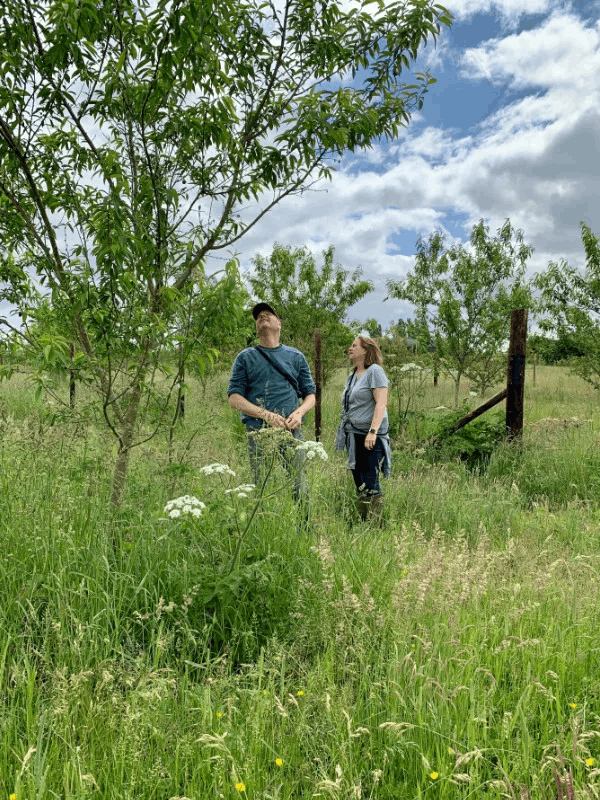
In 2016 Helen planted thousands of trees at Lower Farm as an experiment in permaculture – specifically for gauging the effects of integrating productive trees into farmland, with a view to improving overall productivity while enhancing wildlife and protecting soils.
The farm and wider environment is now enjoying the benefits from this resulting Agroforestry – combined trees, plants, crops and grazing animals on the same land.
The long term motivation for planting trees is to increase climate change resilience. As our weather becomes increasingly unpredictable, with higher temperatures and more extreme rain and wind, we need to protect ourselves. Trees are great for this. They build soil health and organic matter, and increase infiltration of water through the soil. At Lower Farm the soil is mostly heavy clay and we’re hoping that our increased tree cover will help to dry out the soil a little, which will increase grass production and potentially even allow the cows to be out for longer even when we have cold or wet conditions.
Helen has always been a passionate advocate for animal welfare, and trees are a fabulous tool for keeping our stock happy and healthy. They keep the hot sun off them in summer and shelter them from wind and rain all year round. Some of the plantings will also provide food for the stock – trees typically have higher micronutrient levels than grass forage, and are stocked with tannins which can reduce their internal parasite burden.
Diverse systems are more productive, Darwin predicted this 150 years ago. Agroforestry systems are typically at least 3% more productive than ones that grow crops, animals or trees on their own, We still need to be profitable business though so choosing the right trees for our farm is crucial.
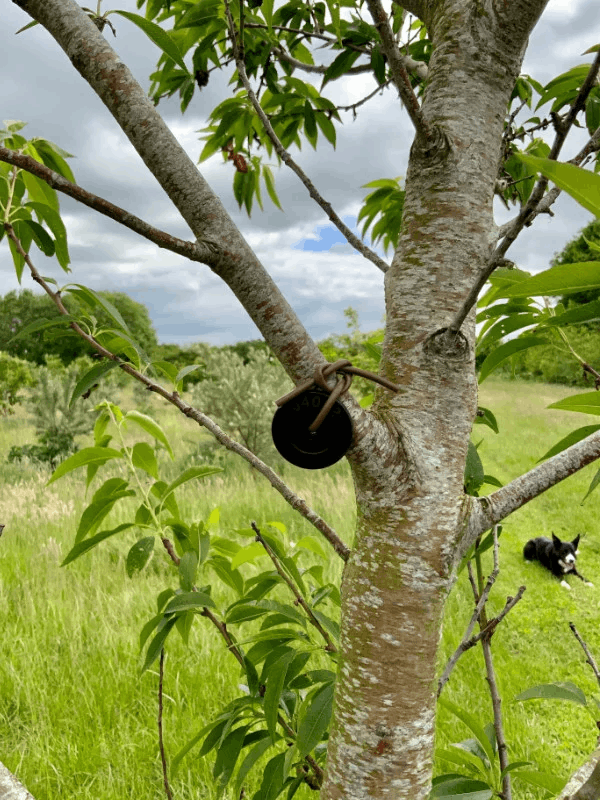
We’re experimenting with a whole range of species – some for timber, others for the animals, and quite a lot for human consumption. Lower Farm has now become a haven for wildlife among the flourishing trees and shrubs, as well as a place for experimenting with climate-beating fruit crops (apples that ripen late in to Autumn, for better seeing qualities) as well as crops – such as the almond (below) – that you might not expect to find in southern England.
Caring for
Our Livestock
“Of all the benefits I love about organic farming – the wildlife, the landscape, the delicious food – what motivates me more than anything is allowing our animals to have as good a life as possible.“
Helen Browning
Dairy cows
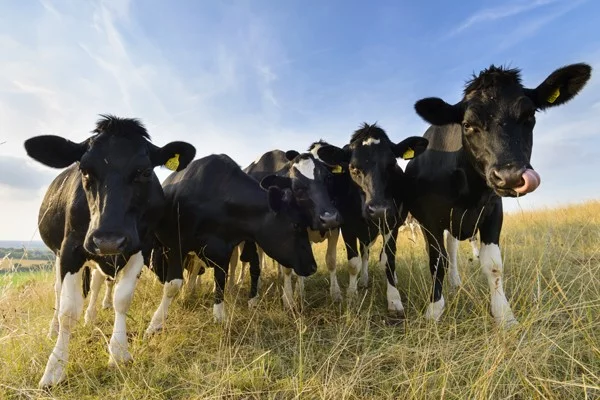
The farm is predominately dairy, as the next generation (my daughter Sophie and her husband, Dai) are taking over the reins. We have two dairy herds, one on the lower land just below the village, the other high on the Ridgeway at Starveal, both with their own milking parlour; about 500 cows in total, plus lots of young calves and heifers.
Pigs
Our Saddleback sows have a special place in my heart. So much of my life has been spent learning, then championing a better life for these intelligent creatures. If we want to eat meat, then we should ensure that animals not only avoid suffering, but have some fun too.
Beef
Our ‘Good Beef’ range is from cows that have been born and raised on the pastures here at Eastbrook Farm. At the end of a productive dairy life, the cows are retired and allowed to rest and graze naturally before being sent off for beef.
Besides supporting a circular food system in line with our ethical aims, retired dairy beef (or Basque beef, as it is known when from Spain) is renowned for a serious amount of flavour and marvellous marbling of fat from a healthy active life on grass meadows.
Digging deeper
What is organic?
Choosing organic meat and dairy products has huge benefits not just for the animals that produce them, but also for farmers and the environment.
In the face of climate change, rising diet-related ill-health and widespread declines in our wildlife, the need to produce healthy food, cut greenhouse gas emissions, and protect wildlife grows more acute by the year. There is no magic bullet to tackle the challenges that face us, but the buying decisions we make every day are a simple but powerful form of direct action.
A symbol of trust
Fairtrade, free-range, natural and organic – there are so many symbols to look out for these days it can be confusing knowing which is best for you. Whatever you’re buying, when you choose organic, you choose products that have been produced to the highest animal welfare and environmental standards. It means fewer pesticides, no artificial additives or preservatives and absolutely no GM.
All organic products come from trusted sources. When you see the Soil Association organic symbol, you know the product has met a strict set of standards which define what farmers and manufacturers can and cannot do during production. All organic farms and manufacturing companies are inspected at least once a year and the standards for organic food are laid down in European law. Getting organic certification isn’t easy and when you buy an organic product you know what you’re buying really is what it says on the tin.
Find out more about organic standards.
Organic pigs – happier, healthier animals
Organic pigs are kept in conditions that, as far as possible, allow them to express their natural behaviour. This includes being kept in family groups with free access to fields when conditions allow. In practice this means that most organic pigs will be outdoors all year round, though indoor housing is permitted in severe weather conditions, provided that there is plenty of straw bedding for the pigs, and continued access to an outdoor run.
Soil Association standards ban several practices that are common in the non-organic pig industry. These include:
- Nose ringing – this is used to prevent pigs from natural rooting behaviour
- Tail docking – pigs in confined spaces often bite each other’s tails, so non-organic producers dock tails to prevent this
- Farrowing crates – these are small metal cage only inches wider than the female pig, which are used around the time she gives birth to restrict her movement and prevent her from following maternal instincts.
- The routine use of antibiotics on organic animals is banned. Many non-organic pigs, poultry and dairy cows receive antibiotics routinely, whether or not they are unwell. Under EU law, farmers are even allowed to give animals antibiotics which are critically important in human medicine.
- Look for the Soil Association logo and you can be sure the pork or bacon you’re eating has been raised to the very highest standards and is fully traceable from farm to fork.
More information about organic cows and sheep.
With thanks to the Soil Association for copy – please visit their website for more information.